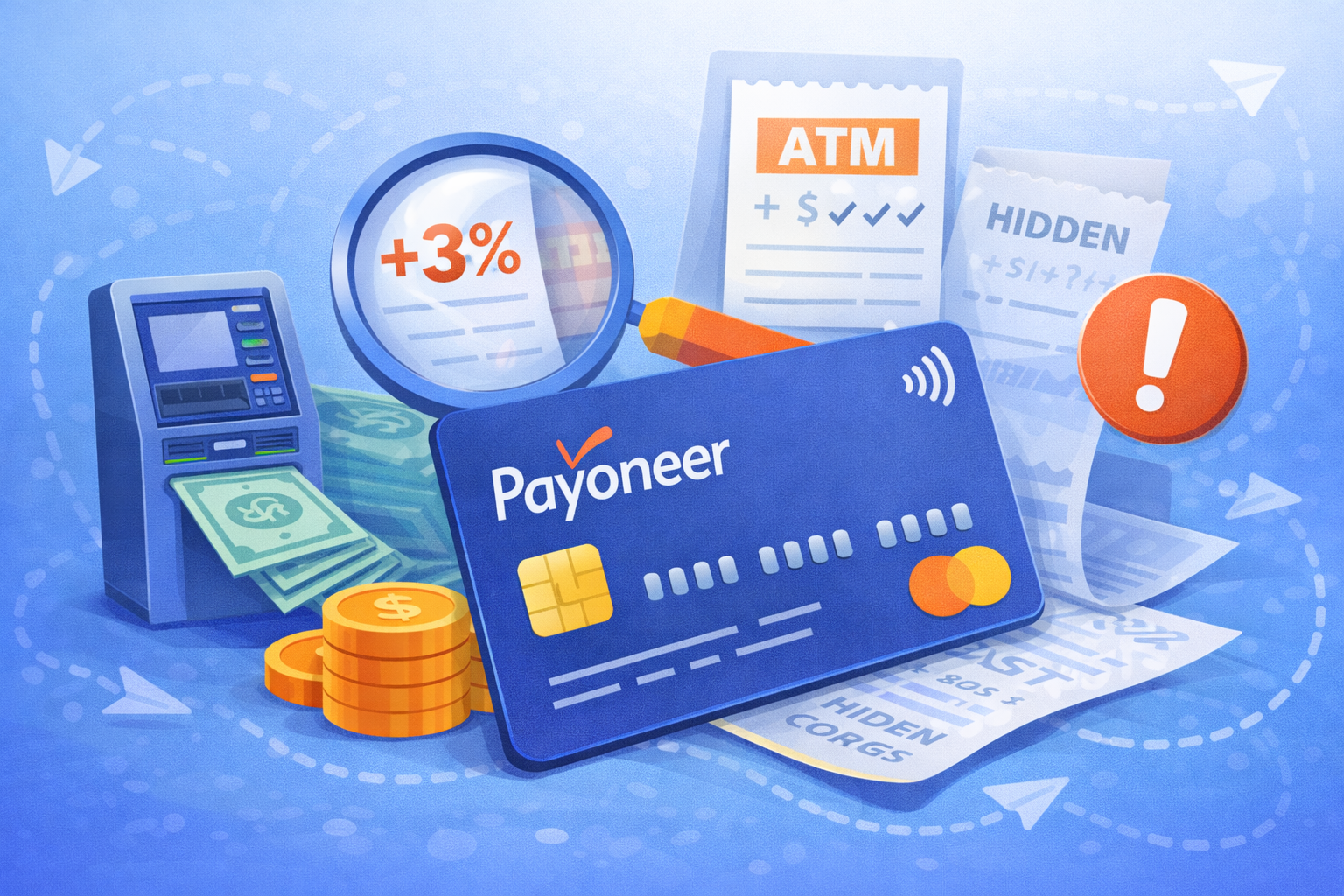
The Payoneer prepaid Mastercard is one of the easiest ways for freelancers to access their earnings. Instead of waiting for bank transfers, you can withdraw cash at ATMs or pay directly in stores.
However, many users underestimate the Payoneer card fees. While the card is convenient, it can also be one of the more expensive ways to access your money if you don’t understand the cost structure.
This guide explains all Payoneer card fees — including ATM withdrawals, payments, currency conversion, and other hidden charges.
What is the Payoneer card?
The Payoneer card is a prepaid Mastercard linked to your Payoneer account balance. It allows you to:
- Withdraw cash at ATMs worldwide
- Pay online or in physical stores
- Access funds without withdrawing to a bank account
The card works similarly to a debit card, but with its own fee structure.
Annual card maintenance fee
The Payoneer card usually includes an annual maintenance fee.
This fee is typically around $29–$30 per year, though it may vary depending on region and card type.
The fee is automatically deducted from your Payoneer balance.
ATM withdrawal fees
Withdrawing cash from an ATM is one of the most common uses of the Payoneer card.
Typical costs include:
- Payoneer ATM withdrawal fee
- ATM operator fee (charged by the bank that owns the ATM)
- Currency conversion fee if the ATM uses another currency
Because several fees may apply at the same time, the real cost of withdrawing cash can be higher than expected.
ATM balance inquiry fee
Checking your card balance at an ATM may also generate a small fee.
Many freelancers avoid this charge by checking their balance inside the Payoneer mobile app instead.
Currency conversion fees
If you pay with your Payoneer card in a different currency than your balance, Payoneer applies a conversion markup.
This conversion markup can be around 3% or more, depending on the currency pair.
For freelancers who travel or shop internationally, these fees can accumulate quickly.
Declined transaction fees
Some users are surprised to learn that declined transactions may also trigger a fee in certain situations.
This can happen if:
- The card balance is insufficient
- The merchant declines the transaction
- The ATM rejects the request
To avoid unnecessary charges, always verify your balance before attempting withdrawals.
Is the Payoneer card expensive?
It depends on how you use it.
If you withdraw cash frequently from ATMs, the total cost can be relatively high.
If you use it mainly for occasional purchases or emergency access to funds, the convenience may outweigh the fees.
Alternatives to using the Payoneer card
Some freelancers avoid card fees by withdrawing funds directly to a bank account or using multi-currency payment platforms.
For example, services like Wise allow freelancers to hold balances in multiple currencies and convert money at rates closer to the real market exchange rate.
Best strategy for freelancers
- Use the Payoneer card mainly for payments, not frequent ATM withdrawals
- Avoid currency conversions when possible
- Withdraw larger amounts instead of many small transactions
- Compare fees with alternative payment platforms
Final thoughts
The Payoneer card is convenient and widely accepted worldwide. However, it should not always be your primary method for accessing earnings.
Understanding the full Payoneer card fee structure helps freelancers make smarter financial decisions and keep more of their income.
Disclosure: This article may contain affiliate links. If you sign up through them, we may earn a commission at no additional cost to you.
You may also want to read our guides about Payoneer withdrawal limits and Payoneer exchange rate markup to better understand the real cost of using the platform.