How Fiverr Payments Work for Freelancers
Fiverr is one of the biggest freelance marketplaces in the world, connecting freelancers with clients across many countries. Getting orders is only part of the job — understanding how Fiverr payouts work helps you avoid unnecessary losses on withdrawal fees, currency conversion, and slow cash-outs.
This guide explains how freelancers receive money on Fiverr, when funds become available, which payout methods exist, what hidden costs to watch for, and how to optimize your withdrawals to keep more of what you earn.
When Fiverr Releases Your Earnings
Fiverr does not release earnings immediately after an order is completed. Your funds go through a clearance period (sometimes called a “pending” or “clearing” stage). After the clearance period ends, money becomes available in your Fiverr balance and you can withdraw it.
- Standard sellers: Earnings become available after a clearance period set by Fiverr.
- Top-tier sellers: In many cases, the clearance period is shorter.
The exact timeframe can vary depending on your account status, the type of service, order risk level, and internal platform rules. The key point: plan your cash flow assuming you won’t withdraw instantly on the same day you deliver work.
Fiverr Withdrawal Methods
Fiverr supports several payout options. Which ones you see depends on your country and account availability.
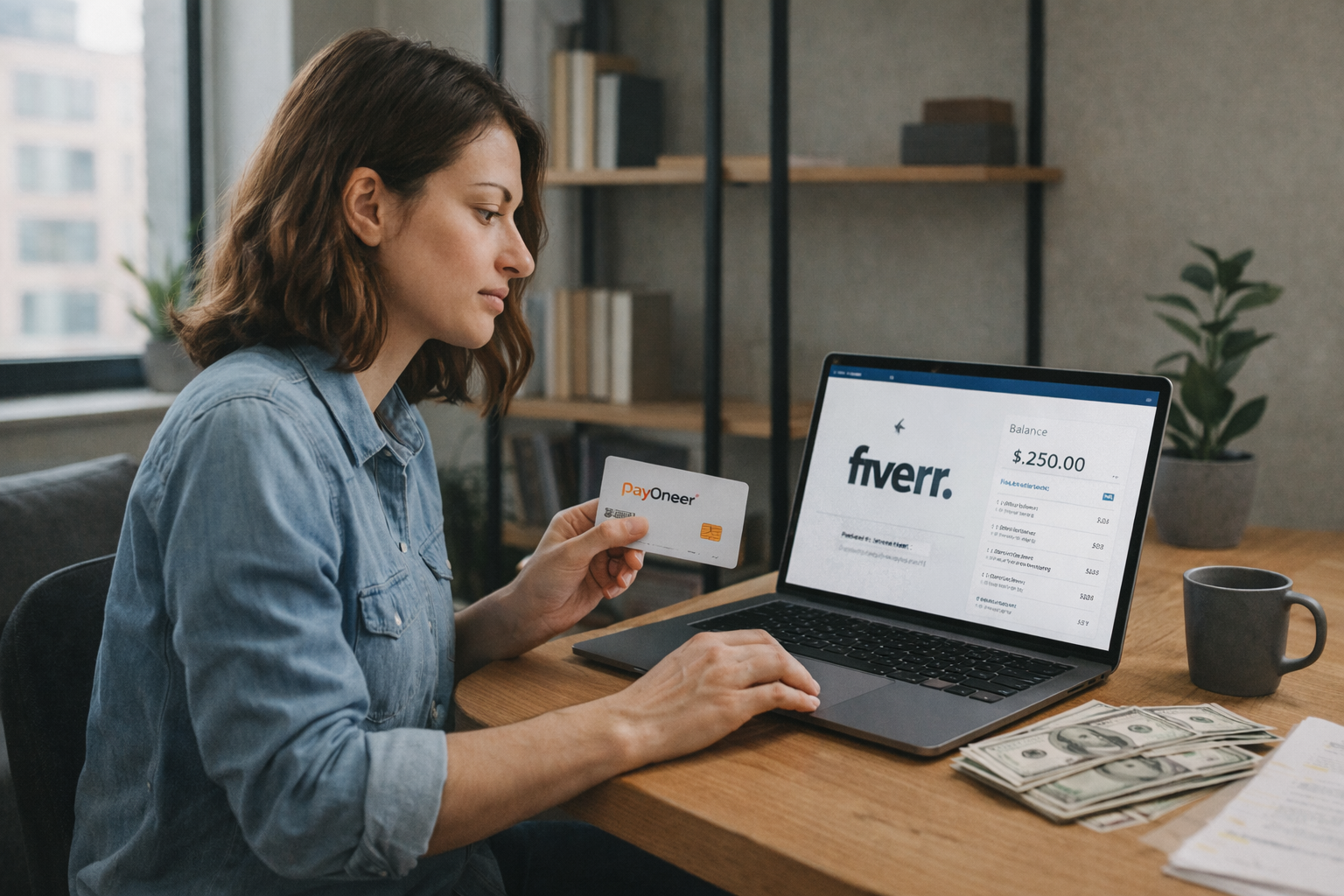
1) Payoneer
Payoneer is one of the most popular payout methods on Fiverr because it’s built for freelancers and marketplace payouts.
- Speed: Usually fast once you request the withdrawal.
- Convenience: Works well if you already use Payoneer for other platforms.
- Main cost: Currency conversion and local bank withdrawal costs can reduce your net amount.
Payoneer is often the best “default” option if you want a stable system for marketplace payouts and you don’t want to depend on PayPal.
2) PayPal
PayPal is convenient and widely supported, but it often becomes the most expensive option due to currency conversion markups and potential account limitations.
- Speed: Typically fast to your PayPal balance.
- Main cost: High FX conversion fees if you withdraw to a different currency.
- Risk factor: Holds, limitations, and verification requests may happen unexpectedly.
PayPal is useful when speed matters more than cost, but it’s rarely the best long-term solution for minimizing payout losses.
3) Direct Bank Transfer
In some regions, Fiverr offers direct bank transfer via third-party processors. This can be stable, but it may include fixed fees and less favorable exchange rates depending on the route.
- Speed: Often takes 1–3 business days (sometimes longer depending on banks).
- Main cost: Flat withdrawal fee + possible exchange rate markup.
- Best for: Larger withdrawals if your banking system is reliable and fees are predictable.
Hidden Costs: Where Freelancers Lose Money
Many freelancers look only at Fiverr’s visible withdrawal fee (if any), but most losses come from two hidden areas:
- Currency conversion markup (PayPal and some payout routes can be expensive)
- Bank-side fees (incoming transfer fee, intermediary bank fees, or card withdrawal fees)
The cheapest payout method is not always the one with the smallest “withdrawal fee.” You must evaluate the total cost after conversion and after the money reaches your bank.
Best Currency Strategy for Fiverr Payouts
To reduce losses, the best strategy is usually:
- Keep your earnings in the original currency as long as possible (often USD)
- Avoid automatic conversion inside PayPal
- Convert only once, using the cheapest converter available to you
Freelancers who convert multiple times (Fiverr → PayPal conversion → bank conversion) lose the most. Your goal is to keep conversion steps minimal and under your control.
Fastest vs Cheapest Withdrawal Method
There is always a tradeoff between speed and cost.
Fastest
- Payoneer: Usually fast for marketplace payouts.
- PayPal: Often instant to PayPal balance (but expensive for conversion).
Cheapest (for many freelancers)
- Payoneer → convert outside Payoneer using a lower-cost FX route when possible.
- Direct bank transfer when the total bank + FX costs are predictable and low.
The best method depends on your country, your bank fees, and how often you withdraw.
How to Optimize Fiverr Withdrawals Like a Pro
Professional Fiverr sellers usually follow these rules:
- Withdraw less frequently (fewer withdrawals = fewer fixed fees and better planning)
- Prefer stable payout rails (choose the method that is consistent in your region)
- Avoid forced conversions (especially PayPal auto-conversion)
- Track net received amount rather than focusing only on “fees”
Even small optimizations can make a big difference over time, especially if you withdraw weekly or handle high volumes.
Common Fiverr Payment Mistakes
- Withdrawing small amounts too often
- Using PayPal without checking conversion settings
- Assuming a method is “cheap” just because Fiverr shows a low fee
- Ignoring your bank’s incoming transfer charges
- Not testing a small withdrawal first to measure the real net result
Can You Receive Fiverr Payments Without Payoneer or PayPal?
In many cases, Fiverr requires at least one supported provider depending on your location. Direct bank transfer may be available, but Payoneer remains one of the most flexible options globally for freelancers who want a marketplace-focused payout solution.
Conclusion
Fiverr payouts are simple on the surface, but the real difference in what you receive depends on withdrawal method, conversion costs, and banking fees. If you want to keep more of your earnings, avoid unnecessary conversions, withdraw less frequently, and choose a payout route that is reliable in your country.
In the next guides, we’ll compare real-world payout scenarios and show how freelancers build a low-fee payment stack for multiple platforms.